Process · Design practice & Influence
Bringing the user into the room
Building shared understanding and improving how user-centred decisions are made.
- Place
- Siteimprove, Product and Engineering.
- Role
- Workshop facilitation, templates, internal talk.
- Team
- Design, product, engineering, marketing.
- Timeline
- Parallel to product work.
Project highlights
Applied
Comic-style journey mapping for multiple refinement workshops.
4 mapping templates
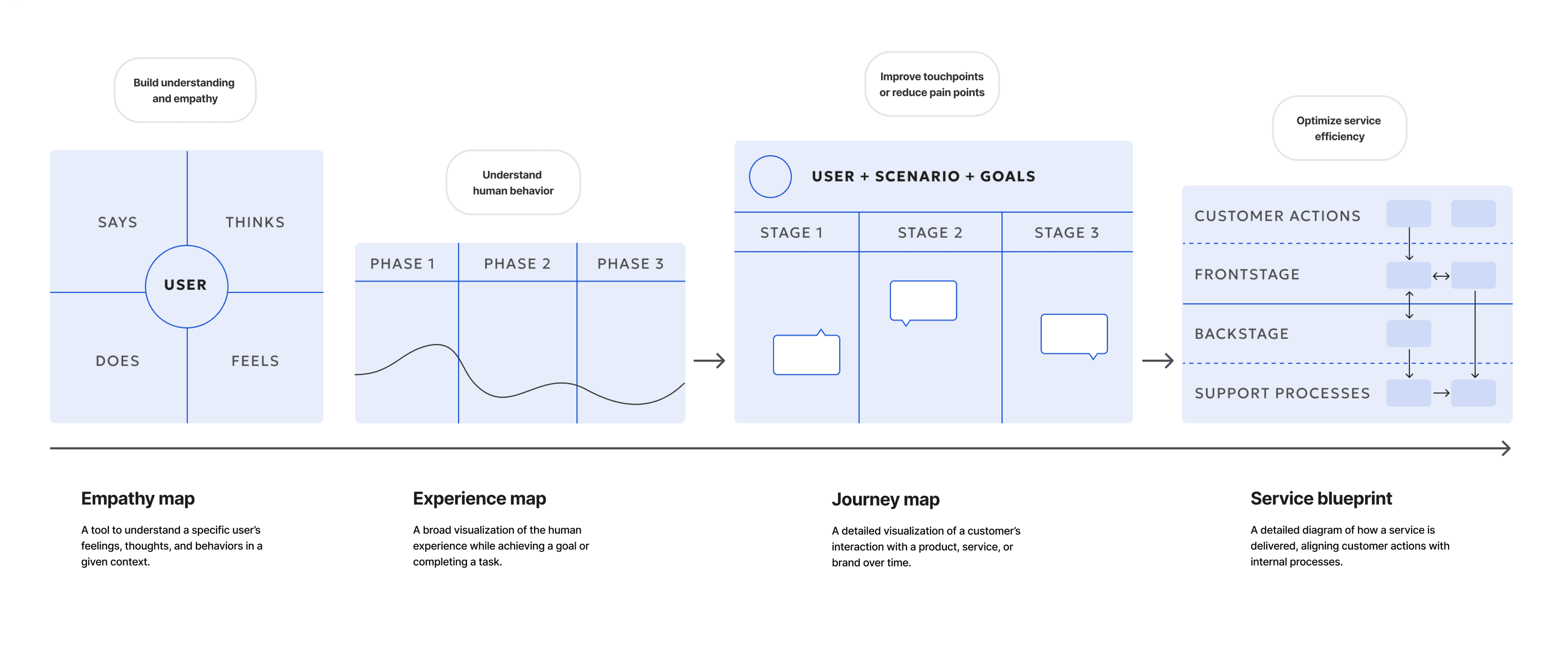
Empathy map, experience map, journey map and service blueprint.
Shared with Product
The Power of Storytelling in Product Development · 9 Jan 2025.
Reused in practice
Adopted by designers and applied to other projects.
Context
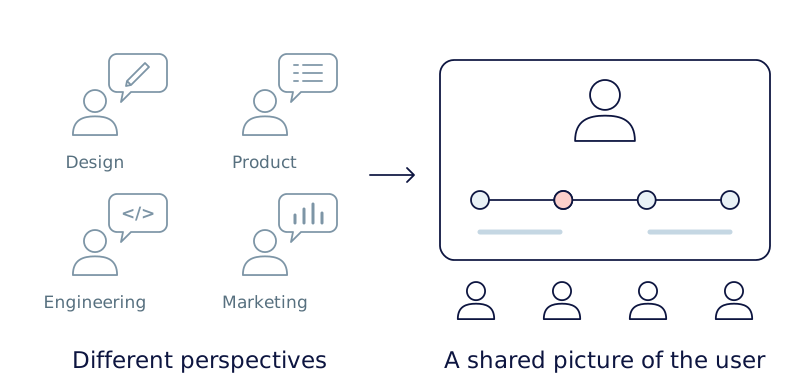
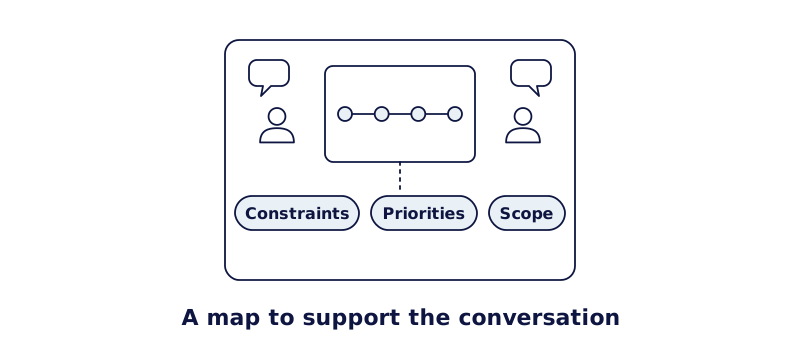
In cross-functional product development, it's easy for discussions to become focused on individual requirements, technical constraints or functional details. When teams don't share a clear picture of the user's experience, it can be difficult to connect these perspectives and agree on the experience we're trying to create.
At Siteimprove, user personas had helped establish a shared understanding of who our users were. I saw an opportunity to build on that foundation by using storytelling and UX mapping to make their experiences more tangible, helping teams move beyond understanding users to designing better experiences together.
Putting it into practice
Making a technical problem human.
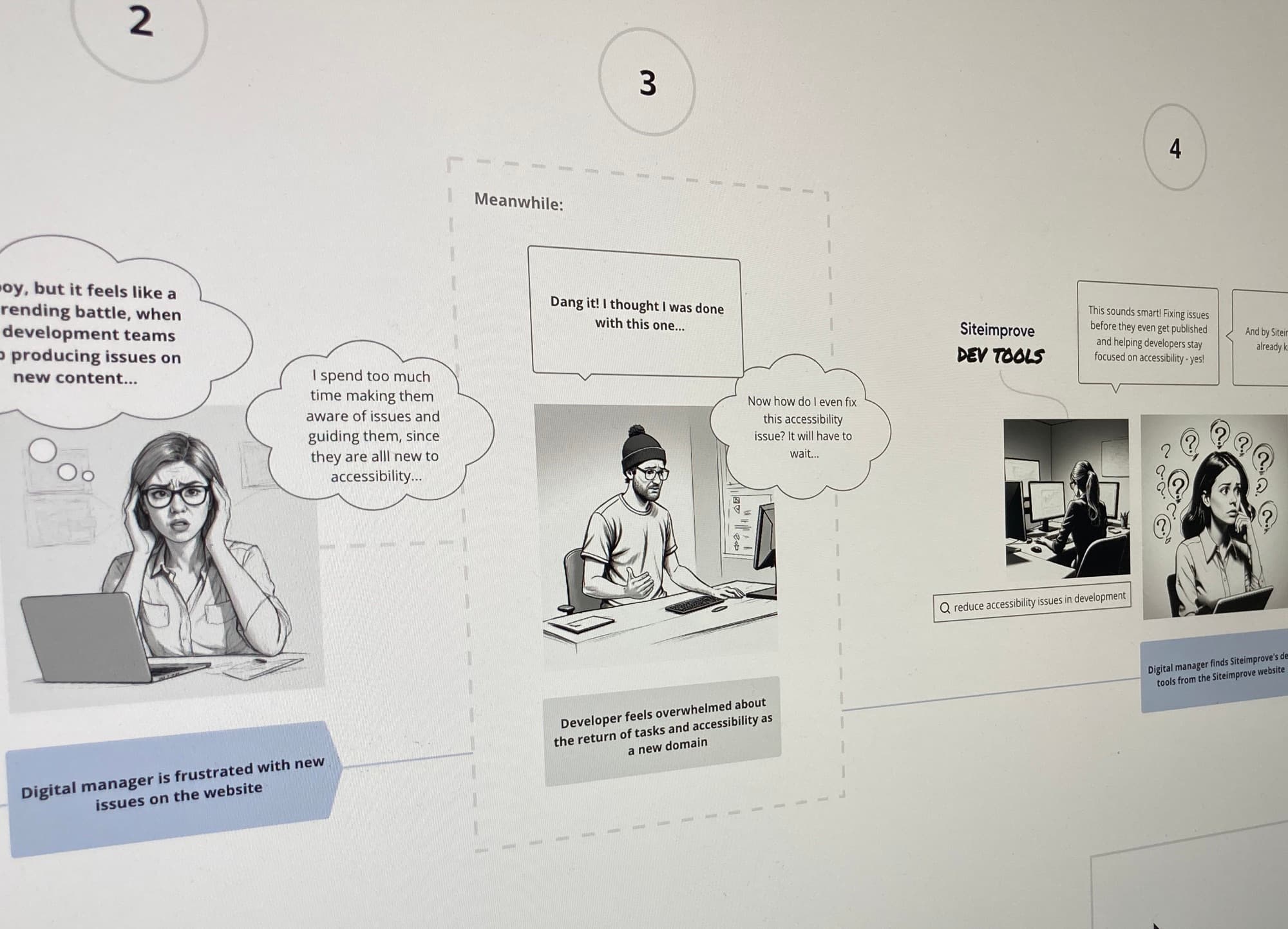
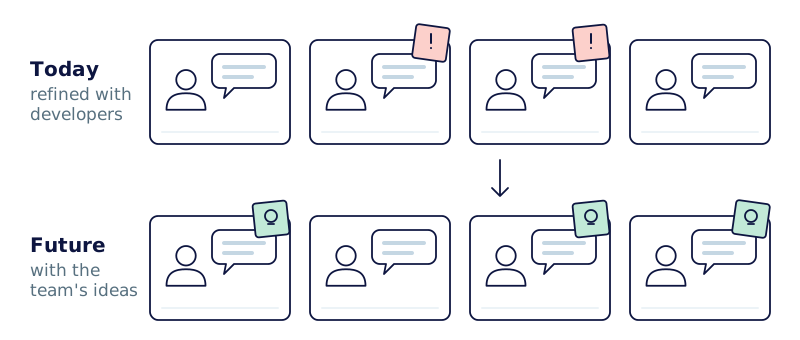
One example was a project involving accessibility testing in the CI/CD pipeline. Following customer interviews, I translated what we'd learned into a visual user journey, using AI-generated, comic-style illustrations to make the user's experience more tangible.
In a collaborative workshop, we first walked through the existing journey. Developers pointed out where we hadn't accurately captured the experience from a technical perspective, helping us refine our understanding of how things worked today.
We then used the same format to map out a future journey, adding ideas and discussing opportunities together. By keeping the user's experience at the centre, the visual story gave everyone a common starting point for ideation, bridging customer needs with technical expertise.
The approach received positive feedback and helped the team engage with the problem. It also helped beyond the immediate project: colleagues in Marketing said the visual story made it easier to understand the direction we were heading in.
Sharing the approach
From one project to a reusable method.
Building on these experiences, I presented The Power of Storytelling in Product Development to the Product organisation on 9 January 2025.
The presentation explored why storytelling matters, how UX mapping can support different stages of product development, and how teams can use these methods in practice. I drew on examples from my own work, including the CI/CD project, as well as external examples such as Airbnb.
To help designers put the ideas into practice, I created reusable FigJam templates covering four mapping methods:
- Empathy maps:
- Exploring a user's thoughts, feelings and behaviours in a particular context.
- Journey maps:
- Understanding a user's current experience and identifying opportunities to improve it.
- Experience maps:
- Exploring broader human experiences and potential opportunities beyond a specific product interaction.
- Service blueprints:
- Connecting the customer journey with the internal processes and teams needed to support it.
The aim wasn't to prescribe a rigid process, but to give teams a practical starting point they could adapt to their needs.
Outcome
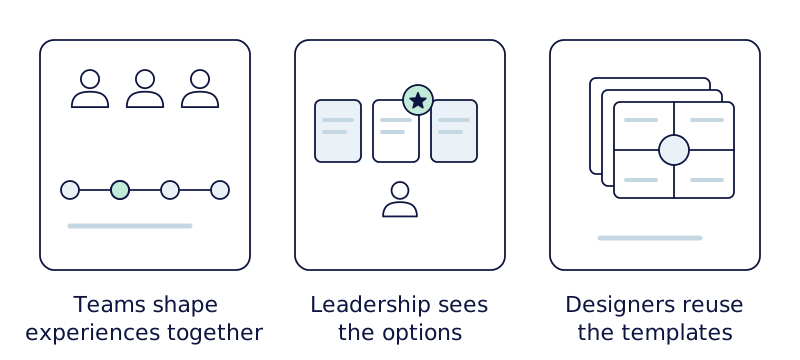
The work extended beyond the original project. Several designers began using the templates in their own processes and presenting them during design critiques, bringing user-centred mapping into wider design discussions.
The CI/CD project demonstrated how storytelling could help a cross-functional team understand a complex experience and shape a future journey together. The presentation and templates then gave other designers a way to apply the approach in their own work.
Together, these efforts created a practical foundation for making storytelling and UX mapping a more accessible part of product development at Siteimprove.
Reflection
This experience reinforced that storytelling can be more than a way to communicate research or present a finished design. It can be a tool for doing the design itself, helping teams explore a problem, challenge assumptions and imagine better experiences together.
Seeing other designers adopt the templates was an encouraging sign that the approach was useful beyond my own projects. Given more time, I would have liked to follow up on how the methods were being used, where they helped most, and what would support their continued use across product teams.
Diagrams on this page are illustrative recreations. They use generic interface elements, not Siteimprove's product screens.